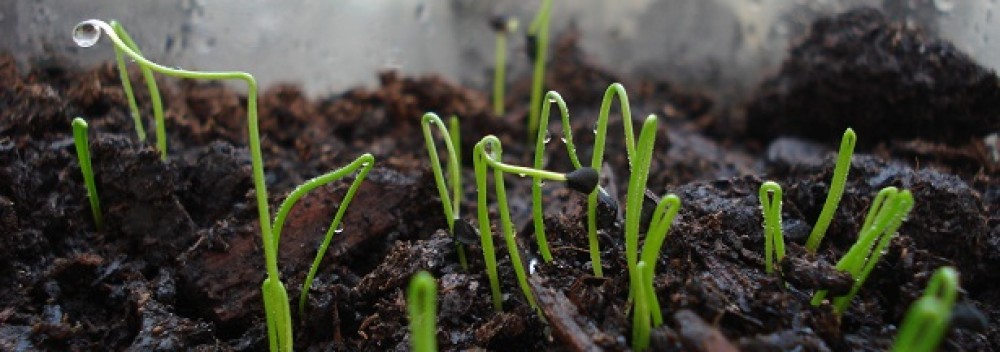
Onion Babies!

Working in the dirt.

Working in the dirt. You know, sort of.

The season has officially begun!

Yesterday after some bribing and coercing (just kidding) I wrangled my mom and aunt out for some farm work. We set up on a future greenhouse bench in the back garage at the house and spent the better part of the morning and afternoon seeding onions.

We mixed the Pro-Mix Organik potting mix with a pit of Gard-N-Tone organic soil amendments for an added kick.

We mixed the Promix Organik potting medium with Garden-tone soil amendments for an added boost.

And what better to do on a rainy Wednesday in February? Armed with Keith’s new book, a radio and a Frankie Valli CD, we drilled holes in the bottoms and some of the lids of piles of old salad containers Mom’s been collecting for a year or so, covering the excess clear patches with black tape. We then filled the containers with potting mix from the wheelbarrow, moistened the soil with a spray bottle of water, made little furrows in the containers (about 1/4 in deep, one in apart), and dropped in something like 20-35 seeds in each furrow depending on length.
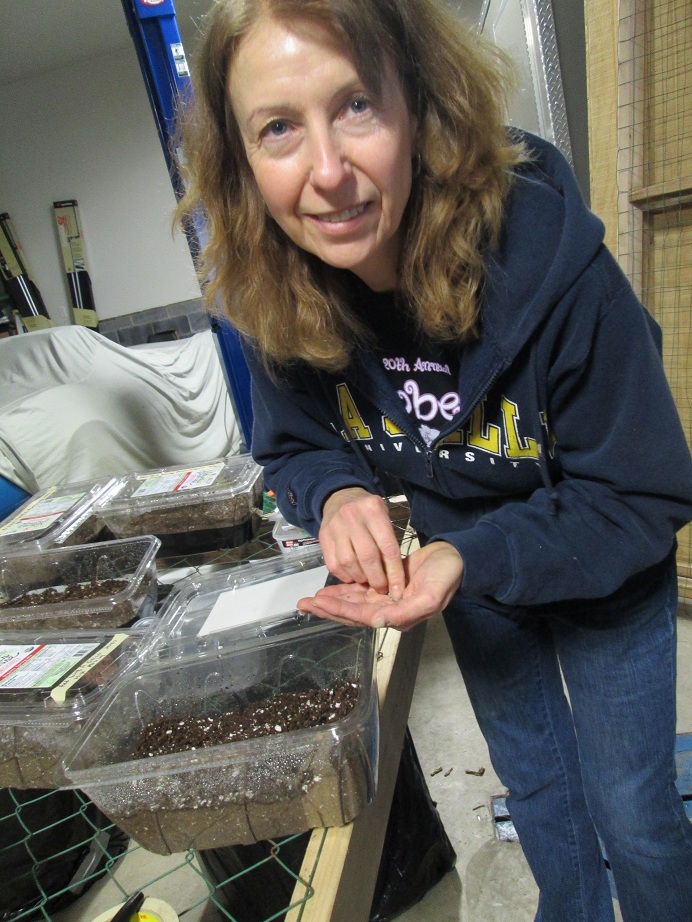
What a ham.

What a ham.

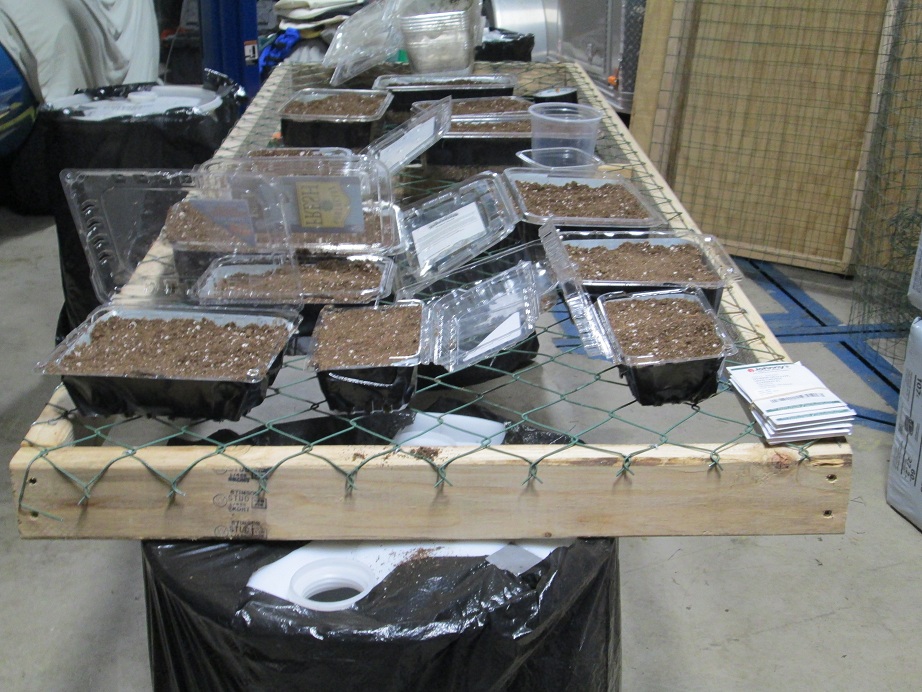
Here are all the onions we'll (hopefully) be offering!

Here are all the onions we’ll (hopefully) be offering!

We then labeled the sides of the container with the seed’s variety, company, organic status (some of the Fedco and Johnny’s seeds aren’t certified organic), and date seeded. I set them up in our newly-erected heating mat (more on that later), dragged out a hose and misted the flats. This may sound simple enough, but all told we ladies were chugging away for a few hours (with lunch breaks, of course),  and seeded something like 5,000 onions! I’ve got a bit more to do today now that I’ve made some space and know that the heating coils won’t burn down the greenhouse (there was some concern, if only from my insane brain, that that might happen, which led to many visits to the mats throughout the day and night).
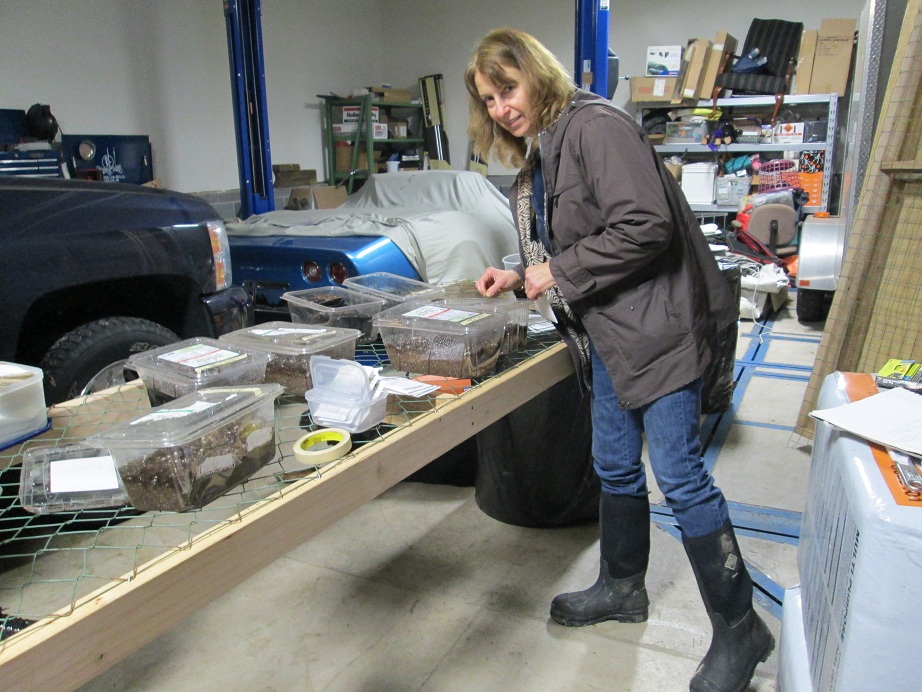
Seed those onions!

Seed those onions!

We also seeded a few cells of basil and lemongrass for fun. The lemongrass seed smells great, and I’m going to start some basil and other herbs soon to sell in Jiffy Pots over at Health Habits, where I’m working part-time (or to any of you who want some!).

My little babies. all waiting to be tucked in to bed.

My little babies. all waiting to be tucked in to bed.

Last night I brought out some leftover greenhouse plastic and tucked the little onions in for bed. Covering them at nights keeps some of the heat from escaping. But when you lift up the containers the bottoms are warm, which is just what we wanted! Thank you, ladies.

"Goodnight, onions," she said in her best Christopher Walken voice.

“Goodnight, onions,” she said in her best Christopher Walken voice.

And thank you, Keith. His book is intricately outlined and details propagation, transplanting and harvest for most of what I’m growing. And I hear his voice with that light New Zealand  accent as I’m reading, which is awesome and hilarious.
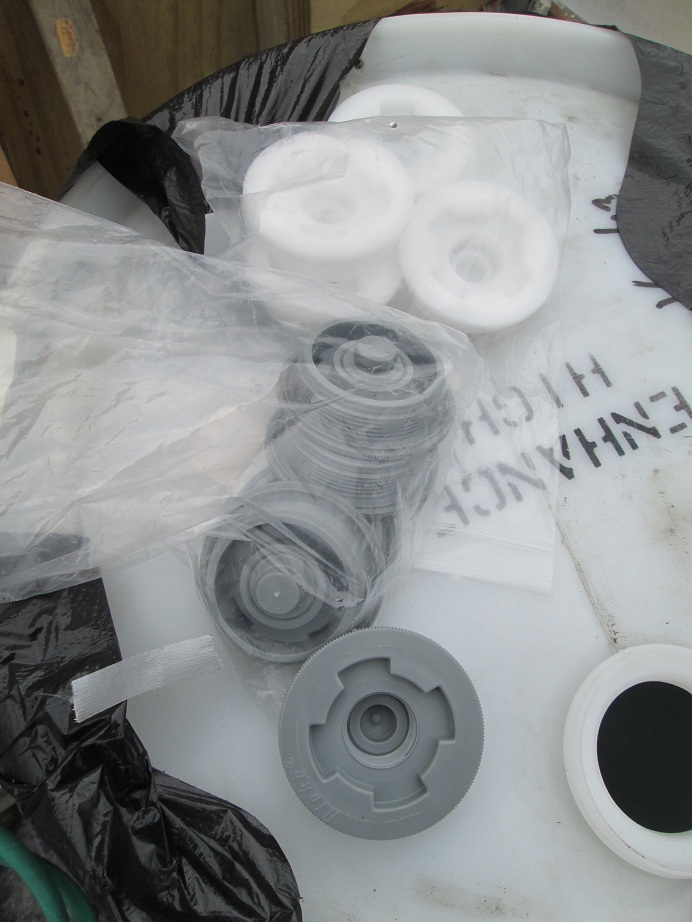
Our dear friend Anthony supplied us with drum caps for our passive solar heat!

Our dear friend Anthony supplied us with drum caps for our passive solar heat!

Yesterday was also a big day for mail! My friend and farmer compadre Anthony ordered some cap samples for me for our water barrels, which I’ve covered with black trashbags and which we hope we can use as passive bottom heating for our trays as the water in them heats up. Caps are trickier to find than the barrels themselves, and it was great to have such a helpful resource to procure them.

Two other recent purchases arrived – one was a riveting book about manure, that I feel will be helpful but know I’ll already have a really difficult time reading.
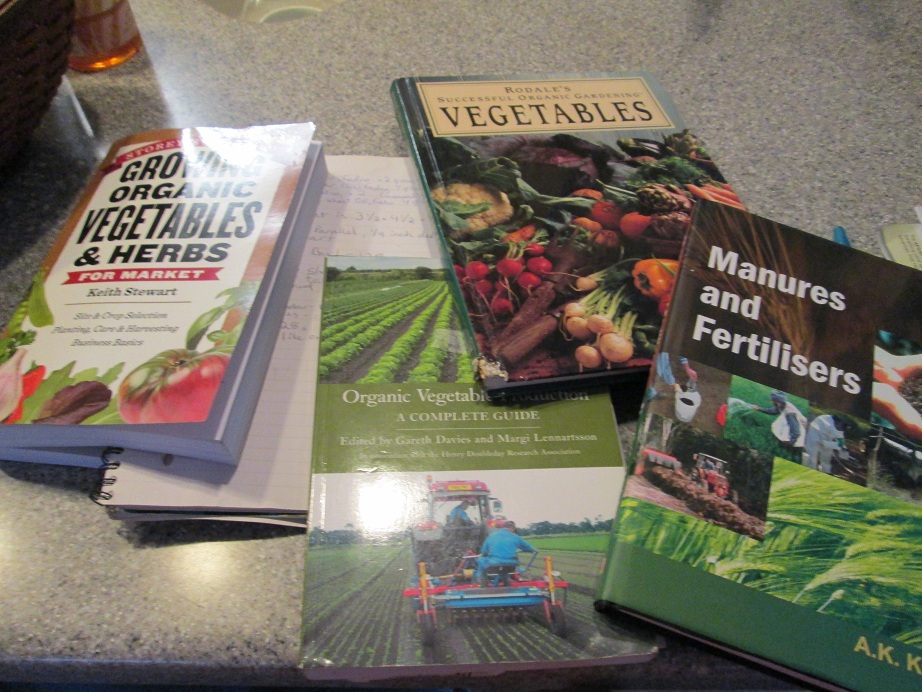
This looks like a college desk - this is why I DIDN'T go to grad school, ahhhh.

This looks like a college desk – this is why I DIDN’T go to grad school, ahhhh.

The other arrival was more fun – A walk-behind Earthway Seeder. These guys are perfect for direct seeding all sorts of produce, from beans and peas to turnips and radishes. You change the metal plates to the size of seed and – well, I haven’t even assembled it yet. So we’ll talk more about this awesome gadget when I gear up to use it.
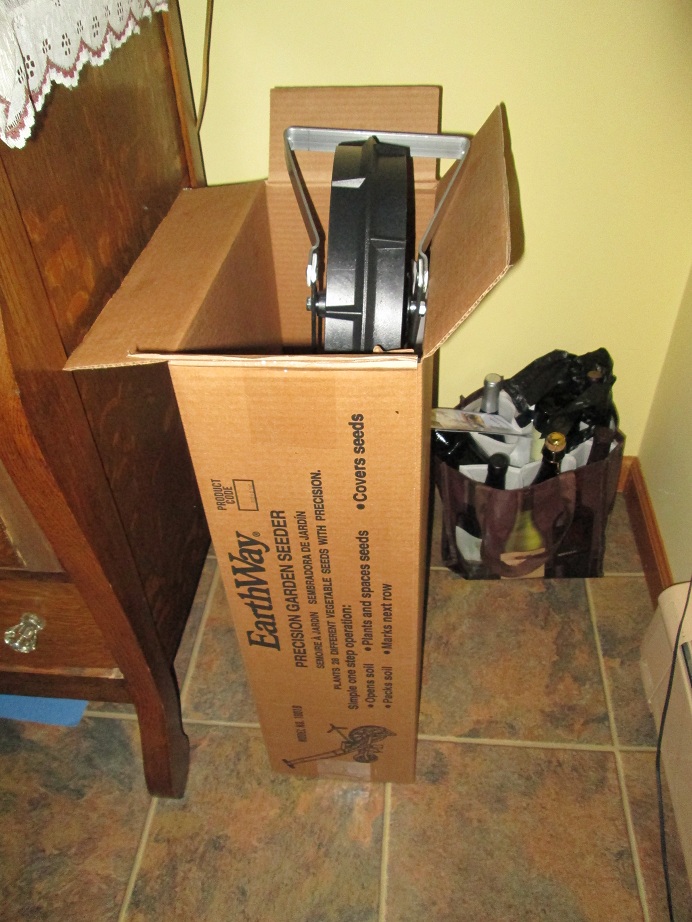
Isn't mail great? Earthway Seeder arrived!

Isn’t mail great? Earthway Seeder arrived!

Now, to take a closer look at that heating system:

So when Matt was still here we spent a fair amount of time researching the best way to create a heating area for germinating seeds. Keith had a number of heat mats that the user would plug in and set at a certain temperature, and it was a good system because of it’s simplicity for the user and it’s ability for temperature control, but it’s an expensive one and now something I can use right now. So we searched around and Matt found some Gro-Quick soil warming cables and I found some online instructions from a farm that has been using them successfully.

Our heating bed!
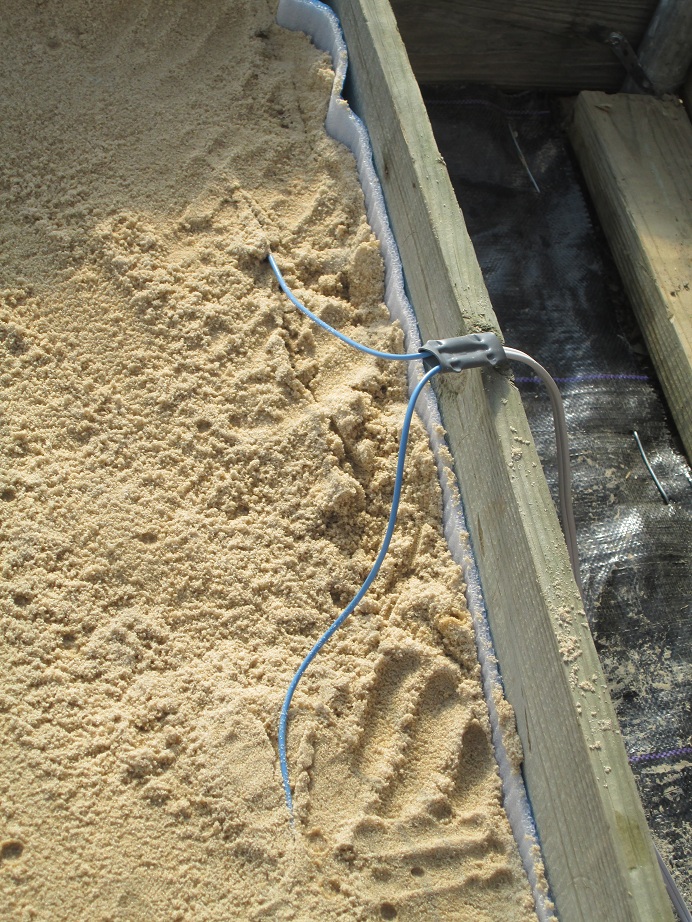
Our heating bed!

017

These are the warming cables sticking out at the end. Despite some questionable customer reviews, they are warm to the touch, and I could feel the heat in the sand and in the bottom of the seedling containers. We’ll see how they do!

We built a wooden frame, braced the bottom with some old board fencing from the Papa Wagner scrap collection and some cinder blocks, and then attached hardware cloth and 1/4  sheet of insulation on the bottom. We ran over to a supply store for buckets of sand and then dumped 1/2 of sand over the insulation. We then took one set of the cables and laid them back and forth in the sand in an S-shape sort of pattern, and then covered the cables .

002

Two of these cables were the cost of one heating mat (which only holds three trays). We are stretched them over a space a bit further than suggested, but the sand seems to be helping in the transfer of heat. Of course, lots of people use all sorts of methods to start seeds. My aunt is going to give us some windows to set up some little warming spots in our old garden to see how that works.

And Teena Bailey, local farmer and grain grower extraordinaire of Red Cat Farm,  uses these incredible cinder block bunkers packed with manure and bedding and covered with compost, to heat her seedlings. Teena opened her farm to me yesterday morning and showed me her area where she cleans and stores her cold produce and eggs, and her big and beautiful greenhouse that can fit a truck inside and where she has her enormous and impressive bunkers. It was great to speak with her – she’s a local legend and just the spunkiest lady farmer I’ve ever met – and it’s exciting to know that folks like these are so close at hand.

All in all, this has been a great week. Still looking for equipment (and am thus far empty-handed), and applying to markets. I re-applied through The Food Trust with a more extensive and articulate application, and I’m making strides toward finishing the momentous Greenmarket application (which is daunting but has really made me organize my field planning, which has been great). Must finish seeding onions and starting some more herbs.

And I’m thinking about a small Philly and local experimental CSA, as I may have mentioned before. I’ve already had some folks express interest, but if you’re up for an adventure in vegetables, drop me a line at liz.m.wagner@gmail.com. I’ll have more specific details and plans in the next week or so to share.

My Old Boss Keith Wrote Another Awesome Book

Image

What great timing!

What great timing!

I came home from Philly this morning to find some exciting mail waiting! Can’t wait to dive in.

Isn't he the sweetest?

Isn’t he the sweetest?


You can get it here or here.

Hey! We Built a Greenhouse Part II: Frames, Plastic, and Victory

If you think this post was a long time coming, you should have watched our building progress.

Essentially, my only building experience up to this point was four years of week-long crash-course carpentry during my time with Project Appalachia, one of La Salle’s renowned and incredible service trips. We’ll get more into this amazing little adventure and how it essentially made me want to be a farmer later (in two weeks, when the next batch of kids is heading down to Harlan, KY).

The point here is that we needed to frame two end walls, with little to no understanding of geography, leveling (this was my fault completely – I hate using levels so I just don’t), or most of Glenn’s tools (at the outset – after some tinkering Matt became handy with all the tools at his disposal).

001

Building, building, building a frame.

After some discussion about what this frame should look like within the scope of the hoops, we picked a basic model a number of folks use in greenhouses. We built one wall outside and the other in Glenn’s sweet back garage, though it wasn’t until later that we realized that springing for extra-long screws instead of settling for free nails would have made a sturdier frame in probably a third of the time it took us. Ah well. Next time.

002

Matt may make the argument that the reason he is in all these pictures is because he did most of the work. But someone had to document (though he is also correct in much of this case)!

So we fit these frames under the hoops and attached them with metal strapping to the hoops. We then covered one wall with plastic by stapling old drip tape from last year’s irrigation over the plastic and into the wooden studs. On the front end we covered the frame with plywood and created a space for the door.

Glenn donated his graffiti-door to the cause. We hung it in place like that for a day, but don't worry, it's a nice happy green now.

Glenn donated his graffiti-door to the cause. We hung it in place like that for a day, but don’t worry, it’s a nice happy green now.

Through all this, Strider insisted on being very involved in all our processes. Which included pretty much moving in to Matt’s bedroom with him. That dog shunned his family and spent the weeks of Greenhouse Parts I&II in a fine display of ridiculous dog enthusiasm and traitordom.

He thought he was helping...

Sabotage!

No, dog, you're not helping.

No, dog, you’re not helping.

Before the walls were built, we collected some old fence boards and attached them to the sides of the greenhouse with metal strapping to create a base for the wall plastic. At some point Glenn and Matt were actually dismantling some of our house fence to do this, further evidence of our family’s unraveling.

We had to wait a few days to get a day without wind – and by this time it had snowed so it was snowy inside the greenhouse and we are still contending with that a bit – before unrolling our 6ml greenhouse wall plastic from Agriculture Solutions. We stapled the front end of the plastic to the front plywood through more drip tape, and then began to travel down the sides of the greenhouse doing the same with the baseboards.

So if we pull from here, is it tight yet? What about here? Man, plastic is the pits sometimes.

So if we pull from here, is it tight yet? What about here? Man, plastic is the pits sometimes.

I cannot really explain how long and daunting a process this was as we desperately pulled to tighten each section, swore and got furious when it wouldn’t tighten as we’d hoped, and how many staples we pulled out and put it again before we got the hang of it.

028

There’s still some air movement within that plastic, and we probably could have made it tighter with a couple extra hands pulling (but where’s the fun in that?) but by God, we did it. And it’s warm inside, folks. And beautiful, and ours.

Yesterday Donna and I filled in the gaps between the baseboards on the sides and the ground with wet newspaper and sod to block the air from getting up and under the inside of the plastic. She was excited to be getting her hands dirty, and it is well worth it to bask in the heat inside that structure in the middle of February.

Other things happened during this time that I will save for next week’s blog fodder: Matt built greenhouse benches, we created a heating bed with sand and some soil heating cables, all my seed arrived, I assembled a solar cooker one night while he perfected his Wii Tennis. He’s back home in Indiana again, but still advising with seeding, manure, and all those farm things he understands a lot better than I do.

Don't be fooled by this hardworking photo, readers. Matt still got some vacation time in, eating sushi and bowling and playing all sorts of Wii Sports and bringing the new plague of Katamari Damacy into my home.

Don’t be fooled by this hardworking photo, readers. Matt still got some vacation time in, eating sushi and bowling and playing all sorts of Wii Sports and bringing the new plague of Katamari Damacy into my home.

Victory faces.

Victory faces.

But there is a greenhouse. And about a billion other things to do. But there is a greenhouse.

Enter: Greenhouse

Enter: Greenhouse

Hey! We Built A Greenhouse: Part I

What have I done in 2013?

Well, we started the farm.

After days of decision planning, price comparing, unbelievably tedious and painful (for me, anyway) math, reading vegetable descriptions and discussing the pros and cons of various tomatoes, squash and beans, I sat down and ordered my seeds. Johnny’s, High Mowing, and Fedco are now the happy owners of substantial amounts of my bank account. Maine Potato Lady came in at the end yesterday when I bought my really exciting and colorful potato seed stock and Stuttgarter onion sets.

I filed for an EIN and my fictitious name for the farm – Wagner Farmstead is officiated. I filled out some applications to a few farmers’ markets in Philly and Greenmarket in NYC, and I’m waiting to hear from them while simultaneously applying to the state to accept Farmer’s Market Nutritional Program vouchers and to the Department of Agriculture to accept EBT.

Which leads us to the project of the past two weeks: THE GREENHOUSE.

I am atrocious at math. I think I’ve said this before (besides this article already)– maybe several times. So let me reiterate once more – having a couple men around me who can do math and are mechanically-minded has been incredibly helpful.

Glenn being awesome

Glenn being awesome

Matt, all-knowing veggie farmer from Keith’s Farm, flew in from Indiana two weeks ago to assist (read: do most of) this project. Prior to his arrival, Glenn leveled the ground with his New Holland and we (read: mostly he) measured out the 36-inch ground sleeves (hollow metal rods that you sledgehammer 18 inches into the ground), making sure the screw holes were not facing out so the bolt heads would scrape the plastic walls.

Tractor!

Tractor!

Here is the sort-of level ground with ground sleeves

Here is the sort-of level ground with ground sleeves

When Matt arrived he placed the hoops in the ground sleeves, keeping them as level as possible. He screwed them into place with one of Glenn’s many awesome drills (we proceeded to use a litany of Glenn’s awesome equipment, from jigsaws and miter saws to, well, his entire toolbox).

021

017

Hoops!

And yes, at the end of all this there is a greenhouse…and more! Stay tuned for the next update: We Built A Greenhouse Part II: Frames, Walls, Snow, Benches and Victory

-Farmer Liz

A Farm Flyer For Your Thoughts

This is the flyer I’ve been handing out to folks with my garlic around the area. Take a look and let me know what you think! I’m thinking of doing a small CSA as well, if anyone in my world in the Lehigh Valley/Philly area is interested. Prices and planning coming up.

This list is pending, of course. Seeds are on the way so I’ll have a more concrete list soon – and like the flyer says, I’m still taking requests!

Wagner Farmstead Flyer

To give you a brief idea of what’s going on – I’m making friends with local farmers, I’m reaching out to area stores, co-ops and restaurants (but no definite takers yet), and Matt has been toiling in the cold PA winter building the greenhouse. Perhaps today or tomorrow I’ll post a step-by-step process of our adventures and mishaps.

And now, back out to the cold – today we’re painting and putting up more plastic!